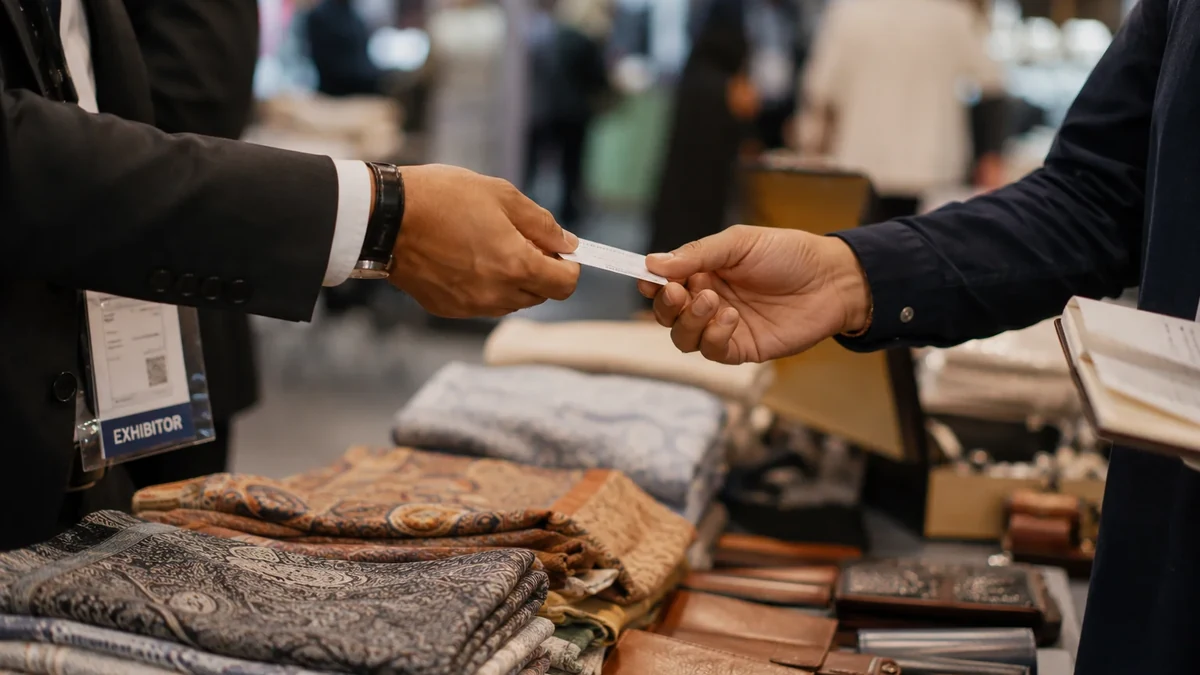
If you're a manufacturer, trader, or SME owner in Pakistan planning to sell internationally, registration is the first real step — not a formality you can skip. Becoming a recognised exporter means five separate touchpoints:
- Your company registration
- Your tax number
- Your bank
- The Trade Development Authority of Pakistan (TDAP)
- The Pakistan Single Window (PSW) customs system
Here's the order that actually works, what each step costs, and — just as importantly — what to do once you're registered and need to find your first real buyer.
What Does It Actually Mean to Be a "Registered Exporter" in Pakistan?
Being a "registered exporter" isn't a single certificate — it's a status built from several government registrations working together. Customs won't clear your shipment, your bank won't process a foreign payment, and most serious international buyers won't sign a contract until these pieces are in place. The good news: none of it requires a lawyer, and most of it can be done in a matter of weeks if you follow the steps in order.
Why order matters
Each step in this guide depends on the one before it — your bank account needs your NTN, your TDAP registration needs your bank account, and your WeBOC ID needs all of the above. Skipping ahead is the single most common reason first-time exporters get stuck for months instead of weeks.
The 6 Steps to Register as an Exporter in Pakistan
This is the exact sequence, based on current SECP, FBR, TDAP, and PSW requirements:
-
1
Register Your Business with SECP
Register as a sole proprietorship, partnership, or private limited company with the Securities and Exchange Commission of Pakistan (SECP). A private limited company is generally preferred by international buyers and banks because it signals a more permanent, accountable business structure. Filing online through SECP eServices is the cheap, fast route: name reservation costs Rs 200, incorporation fees for a small-capital company start around Rs 1,800–2,500, and the digital Certificate of Incorporation typically arrives within 2–5 working days.
-
2
Get Your National Tax Number (NTN) from FBR
Apply for an NTN through the Federal Board of Revenue (FBR). This is required before you can open a business bank account or register with any trade authority — every later step references it. At the same time, apply for a Sales Tax Registration Number (STRN) through FBR's IRIS portal: it's free, typically processed in 3–7 working days, and WeBOC registration (step 6) will ask for it.
-
3
Open a Business Bank Account
Open a current account in your business's name, using your SECP registration and NTN. Foreign currency export payments must legally pass through a registered business bank account — this is also where your bank issues the "E-Form" needed for each shipment.
-
4
Join Your Local Chamber of Commerce
Chamber of Commerce membership is what allows you to obtain a Certificate of Origin for your shipments — a document nearly every international buyer's customs office will require.
-
5
Register as an Exporter with TDAP
The Trade Development Authority of Pakistan (TDAP) is the official body for exporter registration — processing typically takes 7–10 working days once your documents are complete. TDAP registration is also what qualifies you for buyer-seller meetings, trade delegations, and exhibition subsidy programs. If you plan to export to the European Union, note that you'll additionally need REX (Registered Exporter) status, which is applied for through TDAP after basic registration.
-
6
Create Your WeBOC Account and Register on PSW
WeBOC (Web-Based One Customs) has been mandatory for customs clearance since 2011. Since the rollout of the Pakistan Single Window, new exporters register directly through PSW, which now consolidates most of the customs documentation process into one digital portal.
For the exact current forms and fee schedules, TDAP publishes an official step-by-step guide for new exporters — worth reading alongside this one, since requirements are occasionally updated.
What Documents Do You Need to Export from Pakistan?
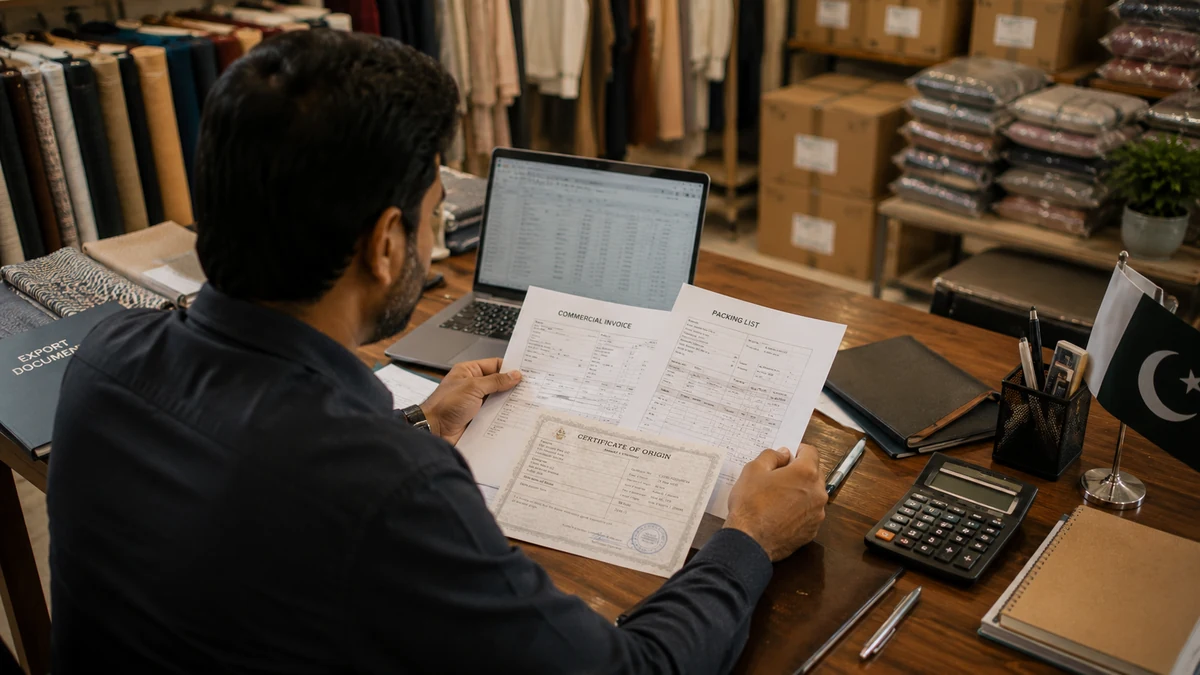
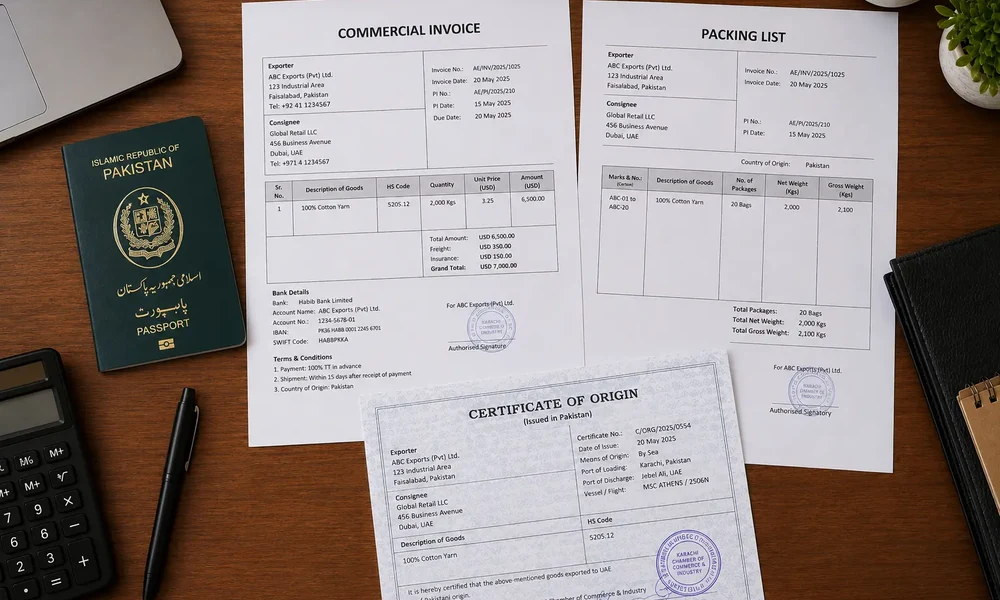
Once you're registered, every individual shipment still needs its own paperwork. At minimum, expect to prepare:
- Commercial Invoice — itemises the goods, value, and terms of sale.
- Packing List — weight, quantity, and packaging detail for each shipment.
- Certificate of Origin — issued by your Chamber of Commerce.
- Bill of Lading or Airway Bill — issued by your shipping/freight provider as proof of shipment.
- E-Form — issued by your bank for foreign exchange compliance.
- Goods Declaration (via WeBOC/PSW) — the digital customs clearance filing.
How Long Does Exporter Registration Take in Pakistan?
For a business that already has its SECP and FBR registration in place, TDAP and WeBOC/PSW registration typically adds 2–4 weeks. Starting from zero — including SECP incorporation — a realistic full timeline is 6–10 weeks, mostly waiting on document verification rather than active work on your part.
The most common delay
Incomplete or mismatched business names across SECP, FBR, and bank records are the single biggest cause of delay at the TDAP and WeBOC stages. Double-check that your registered business name is spelled identically on every document before you submit anything.
You're Registered — Now What? Finding Your First Buyer
Registration proves to customs, banks, and buyers that you're a legitimate exporter — but it doesn't put a single order in your inbox. Most new exporters try cold outreach or general B2B marketplaces first, and quickly find the response rate is low and the buyers are unverified.
The faster path most established Pakistani exporters use is building a B2B sales strategy around face-to-face buyer meetings — specifically, international trade exhibitions, where buyers who are already sourcing from Pakistan show up in person, ready to place orders. Exhibition-industry research backs this up: CEIR (Center for Exhibition Industry Research) data shows it takes an average of 3.5 follow-up calls to close a sale that started with an in-person exhibition meeting, versus 4.5 for one that started cold.
How Pakistan LiveStyle Helps New Exporters Meet Real Buyers
Pakistan LiveStyle organises international trade exhibitions specifically for Pakistani exporters — most recently in Sri Lanka, alongside editions in Bangladesh, the USA, and the Maldives. Instead of spending months trying to get a response from an overseas contact you've never met, you meet verified buyers, distributors, and retail partners in person, over 2–3 days, in a market where Pakistani products already have proven demand.
Frequently Asked Questions
Do I need to register a private limited company to export, or can I export as an individual?
You can register as a sole proprietor — you don't need a private limited company. However, most international buyers and some banks view a registered company structure as more credible for larger or recurring orders.
What's the difference between my NTN and my WeBOC ID?
Your NTN (National Tax Number) is your general tax identity issued by FBR and is required for almost every business activity in Pakistan. Your WeBOC ID is specific to customs clearance for imports and exports, and you can only apply for it after you already have your NTN and bank account.
Can I export without joining a Chamber of Commerce?
Not in practice — a Certificate of Origin, which nearly every destination country's customs authority requires, can only be issued by a Chamber of Commerce, and Chamber membership is the prerequisite for that certificate.
Roughly how much does the full registration process cost?
Less than most first-timers expect. SECP online incorporation starts around Rs 1,800–2,500 for a small-capital private limited company (name reservation Rs 200); FBR NTN and STRN registration are free through the IRIS portal; the remaining costs are Chamber of Commerce membership and TDAP registration fees, which vary by chamber and business size but typically keep the total one-time outlay in the range of Rs 10,000–50,000 — not a major barrier compared to the cost of preparing goods for export.